I've tried to dictate the content of my posts this term around our class learning objectives. The new stuff is highlighted in blue. How'd I do?
Showing posts with label posted by Jennifer. Show all posts
Showing posts with label posted by Jennifer. Show all posts
Wednesday, June 19, 2013

Monday, June 17, 2013
From Musing Thoughts to Concrete Arguments
The Last Lecture by Randy Pausch seemed to be calling me. I'd seen it in the "Great Gifts" section of Barnes & Noble at Christmastime, seen it at the top of "Must Read" lists on every book-selling website, and seen it on Pinterest with several thousand repins. When we were allowed to create our own reading lists this term, I decided it was finally time to read it. I checked it out from the library, a tattered burnt-orange copy that looked much older than 2008, with a frayed cover and worn pages from being dog-eared so many times.
I decided to begin with watching the original speech, which Pausch gave at Carnegie Hall. I first reviewed the book and posed the question "What would be my last words?" This would eventually develop into a thesis as I considered Pausch's last words and their authenticity. I began developing a thesis with a few different driving ideas, and posted them for opinions. I received great feedback from Jocelyn, Danielle, Sined, Dr. Burton, and Dawn, as well as the Goodreads page for the book and my roommates. Ultimately I decided on prompt #4 (the evaluation claim) because I felt it was an argument I could make logically and had solid textual evidence. I did, however, switch my view point to the book being the more authentic version after having my opinion changed from further reading of the text.
To begin writing the paper, I summarized the text. What points did Pausch make? What points did I make? What were the differences between the video and the book? I combed through the book line by line and marked spots where he talked about events prior to the speech, events in the speech's aftermath, and any reflections on the speech itself. This helped me to identify spots where I could make solid arguments.
Next, I had to answer the question why does it matter? Ultimately I came to the conclusion that Pausch felt there was more he needed to say after the speech in order to make his children fully understand, and that was why he wrote the book. It mattered because his message wasn't complete without the book. This became a central point to my paper.
After gathering notes and writing, I posted a draft and received feedback from roommates, classmates outside of class(thank you Sined!) and a great comment from Danielle. She brought up a great point that the book conveyed a range of Pausch's emotions as opposed to just the optimism in the speech. This also became a central point of my paper.
Overall, I'm happy with the way it turned out. I wanted to write in a way that was real and honest, yet still academic, and I think this paper achieves that.
Wednesday, June 12, 2013
Ficiton Subgenre: The Signette: House on Mango Street
In my original reading plan, I decided to read House on Mango Street by Sandra Cisneros. It is a collection of....well, I'm not sure how you'd classify it (I'll get to that)...but together they all tell a story of a young girl living in Chicago, the people she meets there, her wish to escape, and her promise to come back for those she loves. I couldn't decide how to classify this book - definitely fiction, but what kind of fiction. It's almost poetic in its language at times, but it's not quite a collection of short stories either. I did some digging, and here's what I found:
vi·gnette (v n-y
n-y t
t )
)

vi·gnette (v
n-yt)
n.
1. A decorative design placed at the beginning or end of a book or chapter of a book or along the border of a page.
2. An unbordered picture, often a portrait, that shades off into the surrounding color at the edges.
3.
a. A short, usually descriptive literary sketch.
b. A short scene or incident, as from a movie.
tr.v. vi·gnet·ted, vi·gnet·ting, vi·gnettes
1. To soften the edges of (a picture) in vignette style.
2. To describe in a brief way.
[French, from Old French, diminutive of vigne, vine (from the use of vine tendrils in decorative borders); seevine.]
This seems to be the perfect definition to me. It's a collection of vignettes. None alone are long or complete enough to be a short story, but it's a collection of snippets that ultimately tell a tale. Exploring more into this genre. When looking up common examples, this came up: a blog. So while I thought we were all writing informally this term, we've actually been practicing our vignettes. :)

Children's Fiction: Hans Christian Andersen
I try to read one fairy tale by Hans Christian Andersen a day. Some of them are better than others ("The Flying Trunk" - good, "Little Shuteye" - not so good). The one I want to analyze for this post is "The Little Mermaid," which is actually nothing at all like the Disney movie. It's darker. She doesn't get her prince in the end, the sisters try to convince her to murder him, and instead of magically losing her voice, the witch cuts off her tongue. It has a gracious ending though, in which she basically gets to be an angel because of her selflessness and isn't cursed to hell like the rest of her kind.
There is a lot of rich language in the story, and I'm going to analyze it by highlighting the imagery, anastrophe, and parallelism.

There is a lot of rich language in the story, and I'm going to analyze it by highlighting the imagery, anastrophe, and parallelism.
The little mermaid drew back the purple curtain from the tent door and saw the lovely bride asleep with her head on the prince's breast; and, stooping down, she kissed him on his beautiful forehead, looked up at the sky where the dawn was growing brighter and brighter, looked at the sharp knife, and again turned her gaze on the prince, who murmured in his dreams the name of his bride. She alone was in his thoughts, and the hand which held the knife trembled. But then all at once she threw it far into the waves, which shone red where it fell, as though drops of blood were trickling from the water. Once more she looked, with half-glazed eyes, at the prince; then she plunged into the sea, feeling her body melt into foam as she did so.

Historical Fiction: The Secret Life of Bees
In my original learning plan, I talked about wanting to read The Secret Life of Bees by Sue Monk Kidd. As a preface to this review, I would advise anyone who's thinking about reading it not to see the movie first. Not because the movie isn't worth seeing (it is), but it is one of the rare movies that follows the book to a tee. Having seen the movie first, there really were no surprises or unexpected plot twists I found while reading, or even moments where I found myself thinking "hmmm that's so different from the movie."
One of the things I was impressed about with this book was the way that it tackles issues of the theme of racism head-on. No beating around the bush. There are moments when she uses language that makes us cringe in our modern day. There are moments when the characters are so ignorant it makes you facepalm. But there are almost moments of surprise for Lily as she tests the boundaries of what she has been raised in.
The author does a great job of remembering the character's voice. Lily wants to be a writer, and there are moments when she writes like it, such as when she speaks in metaphors about how "salt could not taste sweet" in terms of attraction. She's conscious of the character's development and acknowledgment of the rules of society.

There is a great scene in Chapter 8 when August asks Lily a question she has never been asked before - what do you love? It's a question she is thrilled to answer, but it also reveals a lot about her character in the things she doesn't say but narrates in her first person dialogue.
Overall, I'd recommend this book. It's easy to read, but the complexity of the themes and issues can be hard to swallow if you're not prepared. It has heavy content, especially in terms of self-guilt, but it's also this part that is applicable to our own lives.
One of the things I was impressed about with this book was the way that it tackles issues of the theme of racism head-on. No beating around the bush. There are moments when she uses language that makes us cringe in our modern day. There are moments when the characters are so ignorant it makes you facepalm. But there are almost moments of surprise for Lily as she tests the boundaries of what she has been raised in.
It was foolish to think some things were beyond happening, even being attracted to Negroes. I'd honestly thought such a thing couldn't happen, the way water could not run uphill or salt could not taste sweet. A law of nature. Maybe it was a simple matter of being attracted to what I couldn't have. Or maybe desire kicked in when it pleased without noticing the rules we lived and died by.
The author does a great job of remembering the character's voice. Lily wants to be a writer, and there are moments when she writes like it, such as when she speaks in metaphors about how "salt could not taste sweet" in terms of attraction. She's conscious of the character's development and acknowledgment of the rules of society.
There is a great scene in Chapter 8 when August asks Lily a question she has never been asked before - what do you love? It's a question she is thrilled to answer, but it also reveals a lot about her character in the things she doesn't say but narrates in her first person dialogue.
Right off the bat I wanted to say I loved the picture of my mother, how she was leaning against the car with her hair looking just like mine, plus her gloves and her picture of the black Mary with unpronounceable name, but I had to swallow that back. "Well, I love Rosaleen, and I love writing stories and poems - just give me something to write and I will love it...This may be silly, but after school I love Coca-Cola with salted peanuts poured in the bottle. And when I'm finished with it, I love turning up the bottle to see where it came from...And I love the color blue- the real bright blue like the hat Mary had on at the Daughters of Mary meeting. And since coming here, I've learned to love bees and honey." I wanted to add, And you, I love you, but I felt too awkward.Her hidden feelings are discoveries are in red and are her thoughts, but the author uses more direct language to convey these. More straight forward. The things that are superficial, like loving Coca-Cola, she describes with imagery.
Overall, I'd recommend this book. It's easy to read, but the complexity of the themes and issues can be hard to swallow if you're not prepared. It has heavy content, especially in terms of self-guilt, but it's also this part that is applicable to our own lives.
Monday, June 10, 2013
Ode to my Socks
Pablo Neruda wrote a series of odes to inanimate objects - kitchen tables, tomatoes, etc. In my creative writing class, we have been talking about the idea in poetry that you do not tell something, you show it. You don't say "she was sad and cried." You say "her eyes were dark seas that couldn't contain the waves escaping them." In this poem, "Ode to my socks" by Pablo Neruda, I will be highlighting the showing aka imagery and metaphor versus the telling.
Mara Mori brought me
a pair of socks
which she knitted herself
with her sheepherder's hands,
two socks as soft as rabbits.
I slipped my feet into them
as if they were two cases
knitted with threads of twilight and goatskin,
Violent socks,
my feet were two fish made of wool,
two long sharks
sea blue, shot through
by one golden thread,
two immense blackbirds,
two cannons,
my feet were honored in this way
by these heavenly socks.
They were so handsome for the first time
my feet seemed to me unacceptable
like two decrepit firemen,
firemen unworthy of that woven fire,
of those glowing socks.
Neruda uses great metaphors here of the socks as "two cannons," "two fish," and "two long sharks" to describe the colors of the socks and the way he feels about them. He describes them with such adoration it's almost romantic
Nevertheless, I resisted the sharp temptation
to save them somewhere as schoolboys
keep fireflies,
as learned men collect
sacred texts,
I resisted the mad impulse to put them
in a golden cage and each day give them
birdseed and pieces of pink melon.
Like explorers in the jungle
who hand over the very rare green deer
to the spit and eat it with remorse,
I stretched out my feet and pulled on
the magnificent socks and then my shoes.
Up until this point, the amount of showing versus telling has been clear. The author uses images to convey his feelings about the socks. He never says "I liked them." He says they were "sacred texts," and "rare green deer." It is only in the last stanza that he breaks his format and just spills about what he means.
The moral of my ode is this:
beauty is twice beauty
and what is good is doubly good
when it is a matter of two socks
made of wool in winter.
Mara Mori brought me
a pair of socks
which she knitted herself
with her sheepherder's hands,
two socks as soft as rabbits.
I slipped my feet into them
as if they were two cases
knitted with threads of twilight and goatskin,
Violent socks,
my feet were two fish made of wool,
two long sharks
sea blue, shot through
by one golden thread,
two immense blackbirds,
two cannons,
my feet were honored in this way
by these heavenly socks.
They were so handsome for the first time
my feet seemed to me unacceptable
like two decrepit firemen,
firemen unworthy of that woven fire,
of those glowing socks.
Neruda uses great metaphors here of the socks as "two cannons," "two fish," and "two long sharks" to describe the colors of the socks and the way he feels about them. He describes them with such adoration it's almost romantic
Nevertheless, I resisted the sharp temptation
to save them somewhere as schoolboys
keep fireflies,
as learned men collect
sacred texts,
I resisted the mad impulse to put them
in a golden cage and each day give them
birdseed and pieces of pink melon.
Like explorers in the jungle
who hand over the very rare green deer
to the spit and eat it with remorse,
I stretched out my feet and pulled on
the magnificent socks and then my shoes.
Up until this point, the amount of showing versus telling has been clear. The author uses images to convey his feelings about the socks. He never says "I liked them." He says they were "sacred texts," and "rare green deer." It is only in the last stanza that he breaks his format and just spills about what he means.
The moral of my ode is this:
beauty is twice beauty
and what is good is doubly good
when it is a matter of two socks
made of wool in winter.
The Working Paper
Hey everyone!
I've started work on my paper and would appreciate any and all feedback! Thank you so much for taking the time to read it
I've started work on my paper and would appreciate any and all feedback! Thank you so much for taking the time to read it
Wednesday, June 5, 2013
Fiction subgenre: Dystopian societies
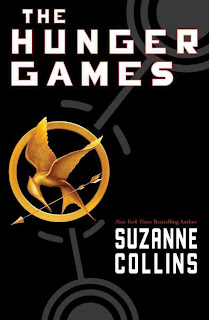
With the tremendous popularity of The Hunger Games, there has been a rise in the interest in Dystopian literature: literature that portrays a bleak future society. I've recently read and discussed with my roommates books like Fahrenheit 451 and 1984. Both of these involve government takeovers.
Fahrenheit 451 has a very interesting theme to me though. Bradbury suggests that the absence of literature will be our downfall. He paints a world where people have no interest in reading. They are more interested in TV walls. Suicide attempts are common. Firefighters do not put out fires - they start them to burn books. I started thinking about this and the importance of literature in our lives. Literature has the power to challenge our ideas and make us think more deeply about the problems in ourselves and society. Bradbury suggests that we will not have our freedoms taken from us, but will voluntarily give them up in favor of momentary happiness. I'm so grateful we live in a country where I can walk to the library and check out copies of the Bible, the Quran, and the Tanakh all at the same time.
What do you think of dystopian literature?


Fahrenheit 451 has a very interesting theme to me though. Bradbury suggests that the absence of literature will be our downfall. He paints a world where people have no interest in reading. They are more interested in TV walls. Suicide attempts are common. Firefighters do not put out fires - they start them to burn books. I started thinking about this and the importance of literature in our lives. Literature has the power to challenge our ideas and make us think more deeply about the problems in ourselves and society. Bradbury suggests that we will not have our freedoms taken from us, but will voluntarily give them up in favor of momentary happiness. I'm so grateful we live in a country where I can walk to the library and check out copies of the Bible, the Quran, and the Tanakh all at the same time.
What do you think of dystopian literature?


Why does it matter?
So what? Why does it matter? You can take hours on end to develop a paper, challenging a scholar's claims and developing your own. You can come up with a brilliant idea, revolutionary even. But so what? Why does it matter? A former professor told me that if you can't answer that question, nothing you do will matter.
The Last Lecture is a book that matters in a lot of ways on its own. It is written as the author's dying message to his children. Many people would be interested for that reason alone. But why does my analysis matter? Why does it matter that there are gaps between the video version of the lecture and the book version.
As I've been reading, this question has been occurring to me over and over. If the author's children someday viewed that lecture, they would see a bright, entertaining professor with a great sense of humor. They would never know that he was nauseous the entire speech from a recent chemo treatment. They would never know that he only finished editing his lecture a moment before it began. They would never know the battle he had with his wife (their mother) over giving the lecture in the first place. They would miss these key details, and so would we. To me, the book creates the human connection. It connects the has-it-together professor with the guy who is terrified out of his mind of cancer. You feel like you get to know the author, like you're standing right there on the stage with him. To me, this is the way. And this is why the gap matters.
The Last Lecture is a book that matters in a lot of ways on its own. It is written as the author's dying message to his children. Many people would be interested for that reason alone. But why does my analysis matter? Why does it matter that there are gaps between the video version of the lecture and the book version.
As I've been reading, this question has been occurring to me over and over. If the author's children someday viewed that lecture, they would see a bright, entertaining professor with a great sense of humor. They would never know that he was nauseous the entire speech from a recent chemo treatment. They would never know that he only finished editing his lecture a moment before it began. They would never know the battle he had with his wife (their mother) over giving the lecture in the first place. They would miss these key details, and so would we. To me, the book creates the human connection. It connects the has-it-together professor with the guy who is terrified out of his mind of cancer. You feel like you get to know the author, like you're standing right there on the stage with him. To me, this is the way. And this is why the gap matters.
Summarizing the Text
Dr. Burton described in his post the "seamless" jump from summarizing text to interpretation. With The Last Lecture, I feel this is something I really need to work on. Every chapter is about a different aspect of the author's life, of his childhood dreams. In one chapter, he talks about wanting to be a football player. In another, he talks about wanting to be a Disney Imagineer. These two are seemingly unrelated, but they all connect to the central theme of fulfilling your childhood dreams. Because the book does feel scattered at times, I want to summarize in the following way in order to derive a more effective analysis.
1. Summary of that paragraph
2. Summary of that chapter
3. How the above summaries relate to the theme of the book
So far that would look like this
1. Author was on the football team and was terrified of his coach, coach reprimands team for being lazy and being more excited about the water cooler than the game, coach dumps water cooler on the ground, team feels bad, team goes back out and does their best, author still discusses coach's influence on him, author can hear coach's voice in his head even as an adult
2. Although his dreams of being in the NFL were unfulfilled, author learned the importance of hard work that was applicable throughout the rest of his life
3. Author fulfilled his childhood dreams in a sense by being able to derive true lessons from football
*gaps identified: few in this chapter. Talks about football a bit more. Missing pictures from presentation
Especially since my thesis will be related to gaps between the video version and the textual version, I want to make sure I fully understand all of the author's points. I'm looking forward to writing this paper!
1. Summary of that paragraph
2. Summary of that chapter
3. How the above summaries relate to the theme of the book
So far that would look like this
1. Author was on the football team and was terrified of his coach, coach reprimands team for being lazy and being more excited about the water cooler than the game, coach dumps water cooler on the ground, team feels bad, team goes back out and does their best, author still discusses coach's influence on him, author can hear coach's voice in his head even as an adult
2. Although his dreams of being in the NFL were unfulfilled, author learned the importance of hard work that was applicable throughout the rest of his life
3. Author fulfilled his childhood dreams in a sense by being able to derive true lessons from football
*gaps identified: few in this chapter. Talks about football a bit more. Missing pictures from presentation
Especially since my thesis will be related to gaps between the video version and the textual version, I want to make sure I fully understand all of the author's points. I'm looking forward to writing this paper!
Monday, June 3, 2013
Fiction: Romance genre
I read A Walk to Remember by Nicholas Sparks and I have to say, it was one of the few times when I thought the movie was better than the book. I was disappointed by Sparks's use of near-cliche stereotypes. Landon isn't just popular; in the book, he's the class president. He isn't working with Jamie on a play; he invites her to the school dance because he needs a date. Jamie doesn't just volunteer; she works in an orphanage. I can't tell you the last time I saw an orphanage in North Carolina, but okay.
.jpg)
What I liked about the movie was that you see Landon's transformation and realization of his potential without cringing. In the book, I couldn't stop cringing. It's full of high school drama and cliches. His foreshadowing makes the plot twists too obvious. Even the plot structure is strange. There is not much of a climax, and the book seems to go straight from rising action to falling action. Overall, it was a disappointment for me. The movie was a better, more modern adaptation with the basics of Sparks's story.
.jpg)
What I liked about the movie was that you see Landon's transformation and realization of his potential without cringing. In the book, I couldn't stop cringing. It's full of high school drama and cliches. His foreshadowing makes the plot twists too obvious. Even the plot structure is strange. There is not much of a climax, and the book seems to go straight from rising action to falling action. Overall, it was a disappointment for me. The movie was a better, more modern adaptation with the basics of Sparks's story.
Thesis Victory!
Based on the feedback that I received from friends and classmates, I've decided to use my evaluation claim as my thesis. However, I want to switch the viewpoint. As I've been reading and getting feedback, I think it could more easily be argued that the book is actually the more complete source, rather than the lecture. The author makes it clear in the book that the lecture is actually the more manufactured source (or at least the beginning of it). He spent months preparing and rehearsing for this lecture. It is only in the book that we learn the only reason he gave the lecture was to feel validated, but that the entire time he was speaking he worried about throwing up from his recent chemo treatments. You would never know that from the speech, during which he is constantly cracking jokes. I want to make the argument in my thesis that the speech is in fact the more artificial of the two lectures, and that you only grasp the author's true meaning with the background story and authenticity of the book.

Friday, May 31, 2013
The Last Lecture (comments please?)
I originally reviewed The Last Lecture for reading purposes, but I think it's going to be the subject of my paper for a lit class. I've asked my roommates and friends for their feedback, and would love your opinions
Wednesday, May 29, 2013
Thoughts on Creative Non-Fiction
This week, I reviewed Dr. Burton's post on creative non-fiction and started thinking about things I don't like about non-fiction. I had the fortune/misfortune to read a short memoir called "from Heaven and Earth in Jest" by Annie Dillard. It's a creepy story about this bug who latches onto frogs, injects them with "the most painful insect bite known" and poison that melts their organs and bones into a goo, and then sucks the goo out of their body, leaving "a frog skin bag" to float away. Feeling nauseous? Me too!
Social Circles: A Political Discourse
When in the Course of human events, it becomes necessary for one people to
dissolve the political bands which have connected them with another, some may attribute this to technology. Why haven't we talked to our friends in months? Is it a result of Facebook? Or is modern technology the reason we keep our friendships alive?
We hold these truths to be self-evident, that all men are created equal, and this is especially clear in the modern age of technology. Gone are the days when men would wait at the airport for hours on end. These days, everyone owns cell phones. A simple "I'm here" and "on my way" have saved many hurt feelings and impatient hearts. Technology destroying us? Never! I say technology sets us free!
We hold these truths to be self-evident, that all men are created equal, and this is especially clear in the modern age of technology. Gone are the days when men would wait at the airport for hours on end. These days, everyone owns cell phones. A simple "I'm here" and "on my way" have saved many hurt feelings and impatient hearts. Technology destroying us? Never! I say technology sets us free!
Monday, May 27, 2013
The Last Lecture

This is the beginning of the introduction for The Last Lecture by Randy Pausch. The author has now passed away, but he wrote this book as his final testament. Pausch was a Computer Science professor at Carnegie Mellon University. He passed away in 2008 from pancreatic cancer, but gave a last lecture entitled "The Last Lecture: Really Achieving Your Childhood Dreams." Below is the video of the original lecture.
The Italian Dish
The Italian Dish is a great cooking blog for exactly what its name suggests - Italian food! In this blog, I like the way she uses onomatopoeia for all the sounds you'd find in the kitchen - the crunch, cackle, pop - to create great imagery. I also like reading this blog for all the great photography. She writes in an easy, accessible way, which I think is great for a blog. All images below @TheItalianDish.


"Saving Punjab" Response
I read the article "Saving Punjab" from Smithsonian and was captivated by the author's love for and discussion of India. The author creates this great image:

The description gives you a great sense of the ironies of that life - the "American Sikh." He also talks about the violence and oppression many of these people have experienced, causing me to reflect on the luxuries we experience here that we take for granted. Things like our religious freedom and freedom of speech. As Americans, most of us have never been yanked out of our homes in the middle of the night by a mob or had to flee to another country.No one gawks here. No one demands money. Everyone seems content simply to be present in this holiest of places. The pilgrims make their slow, reverent clockwise way around the marble platform that edges the pool, past an old man with a white beard reaching nearly to his waist who gently lifts his infant grandson in and out of the sacred waters; a young mother on her knees patiently teaching her little girl the proper way to prostrate herself; a cleanshaven American Sikh, his head covered with a stars-and-stripes handkerchief, praying alongside his brand-new bride, her wrists hidden by bright red bridal bangles.

Wednesday, May 22, 2013
Harry Potter the Musical Review
For those of you who have seen A Very Potter Musical, hopefully you've been able to have a few good laughs. If not, the full 2 hour play is on YouTube from StarKid Productions and University of Michigan. Darren Criss wrote most of the play and music and plays Harry Potter (that's what's up, Glee fans).
The play is largely informal, with very little stage direction or scenery. In fact, the proscenium stage is mostly dark with black floors and walls. The lack of formality of the parody draws attention to the comedy aspect of it - ridiculous songs, exaggerated wigs, Malfoy being played by a girl. There are few props, and the ones that are used are often made of cardboard. To me, the low-budget feel of it only adds to the comedic appeal.
The only problem I have with this play is the vulgarity of it. There are moments when the comedy relies largely on shock value, and I think it would have been better if they had used wit instead of surprising the audience with sexual innuendos.
The play is largely informal, with very little stage direction or scenery. In fact, the proscenium stage is mostly dark with black floors and walls. The lack of formality of the parody draws attention to the comedy aspect of it - ridiculous songs, exaggerated wigs, Malfoy being played by a girl. There are few props, and the ones that are used are often made of cardboard. To me, the low-budget feel of it only adds to the comedic appeal.
The only problem I have with this play is the vulgarity of it. There are moments when the comedy relies largely on shock value, and I think it would have been better if they had used wit instead of surprising the audience with sexual innuendos.
Act 1, Part 4
Death of a Salesman Analysis
I enjoyed reading this scene from Death of a Salesman. Having never read the full play, I want to use this post to analyze this scene and the relationship between Willy and Biff.
This flashback reveals a deterioration in Willy and Biff's relationship as Biff catches his father having an affair. It's unclear what age Biff is at this time, but he refers to his mother as "mama" and promptly bursts into tears because he's so hurt by his father's actions. His father tries to console him, telling Biff that he was "lonely, terribly lonely," but Biff refuses to listen and walks away from him, calling his father a liar.
The stage direction moves forward out of the flashback and reveals Linda, Willy's wife, as being extremely protective of Willy. It's unclear whether she is aware of what happened between Biff and Willy, but she and her sons appear to have a somewhat hostile relationship. It's clear that Biff feels he has disappointed and is disappointed by both his parents in some way.

This flashback reveals a deterioration in Willy and Biff's relationship as Biff catches his father having an affair. It's unclear what age Biff is at this time, but he refers to his mother as "mama" and promptly bursts into tears because he's so hurt by his father's actions. His father tries to console him, telling Biff that he was "lonely, terribly lonely," but Biff refuses to listen and walks away from him, calling his father a liar.
The stage direction moves forward out of the flashback and reveals Linda, Willy's wife, as being extremely protective of Willy. It's unclear whether she is aware of what happened between Biff and Willy, but she and her sons appear to have a somewhat hostile relationship. It's clear that Biff feels he has disappointed and is disappointed by both his parents in some way.

Subscribe to:
Comments (Atom)